http://www.dcgpac.com/


Showing posts with label Packaging Materials. Show all posts

Wednesday, 17 June 2015

Which Packaging Materials Are Best For Packing and Shipping Spices?


Have you ever thought about the importance of spices in your life? Without these crucial elements, your food would remain bland and all those mouth-watering delights would never be prepared. Spices have been an important part of cultures around the world and formed one of the first commodities to be traded between international regions. 

When it comes to packing spices, a lot of care is taken these days due to the stringent quality control and the need for enhancing the shelf life of spices. The challenge is to choose the right packaging materials for packing and shipping spices such that they don’t get spoilt on the way and have adequate protection to preserve them in the best manner possible. Let’s check out some of the best packaging materials that can be used for packing and shipping spices around the world. 

Bulk Jute Bags


This is the traditional packaging material for spices when it comes to shipping them over long distances. It is a convenient option for shipping large quantities of spices with proper labelling. When it reaches the destination, the spices may be sold directly from the jute bags. This eliminates the need for the spices to be repacked into smaller packages before being sold. While using jute bags, it is important to first put the spices in a plastic bag and then put the plastic bag inside a jute bag. The jute provides protection from external elements while the plastic protects the contents from moisture and dust / dirt. 

Corrugated Boxes / Cartons


Corrugated boxes or cartons (as they are popular known) are used widely for packing and shipping spices. This works out pretty well for small quantities. However, for large quantities, jute packs are preferred. These cartons may be made in various sizes and have a lot of scope in terms of the addition of branding elements. Just like jute bags, it is not advisable to put the spices directly into these boxes. You would have to put the spices in plastic pouches / ziplock pouches (preferably with foil) and then place them inside the cartons. This provides dual protection from dust, moisture and external forces. 

Wooden Boxes


Wooden boxes are not used widely in packing and shipping of spices. Not only do the wooden boxes add unnecessary weight to the consignment, but it also does not justify the protection requirements for the contents. But if the purpose is to send a properly arranged set of spices (in small quantities), then wooden boxes make for an amazing presentation.

Re-closable Zip Lock Bags with Foil


Reclosable ziplock bags are gaining popularity as the packaging material of choice for spices. The flexible packaging design and excellent barrier properties make this one of the best packaging material for spices today. The bags are lined with foil and keep contents fresh for longer durations. Moreover, there is a huge scope for branding and providing adequate information on the labels used for this packaging design. From a consumer usage perspective, these bags can be used for packing small to medium quantities of spices which may be used directly from the package itself. Ideally, this packaging material is suitable for powdered spices or coarsely ground spices. 

Clear Poly-Sealed Bags


Clear poly-sealed bags are great for packing whole spices that are coarser and have greater volume. This packaging has an advantage wherein customers may view the contents and determine whether it is fit enough for consumption. The transparent packaging material actually works to build greater trust in the brand, apart from protecting the contents and ensuring prolonged freshness. 

Monday, 18 May 2015

Over Packaging Can Make Your Customers Really Unhappy

Unhappy Customers

Are you using excessive packaging that can be avoided? If this is the case, then might be making your customers very unhappy. Most businesses make the mistake of ignoring the views of the customers with respect to packaging. The times have changed today and the average customer has become more sustainability conscious than ever before. People notice every aspect of the product, including the packaging and without proper adherence to sustainable practices, you would only lose your customers. 

One of the most important areas that people often evaluate when they get a package is the amount of packaging material used. Too less or too much material can deter a customer from approaching the business again. It creates a negative perception in their minds about the sustainability of the package’s design. While under packaging may bring about issues in protection of the contents, excessive packaging would results in increased costs (shipping costs, packaging costs, etc.) in addition to frustration which is an obvious outcome if excessive materials are used. It would make packing as well as unpacking quite cumbersome. 

Excessive Packaging


An example of excessive packaging which fails to justify the packaging needs of the product. (Source: sustainableisgood.com)

It only takes some effort and careful evaluation of the needs of the customers to come up with a packaging design that is not only sustainable, but also attractive and durable. Even if you provide excessive packaging materials, the customers will somehow find a way to put it to good use. For that matter, consumers today are capable of putting any packaging to use by using their creativity. For example, people clean up plastic containers to keep other stuff that you might require in the kitchen. Other use them as pots. I am not sure whether plastic containers work out well as pots, but if it works out, then it’s good. 

As a business, you need to understand the needs of the customers and address their concerns appropriately. While it is possible to reuse extra packaging materials, no one wants to have them in the first place. Investing in a good packaging design might appear to be a bit expensive initially, but in the long run, it will provide more benefits (including intangible benefits such as enhanced goodwill, increased brand value, etc.). 

Wednesday, 6 May 2015

How DCG Helps You To Achieve Zero Packaging Inventory Costs

Manufacturers and ecommerce business have a regular demand for packaging materials in order to ensure delay-free delivery of the products to the customer. In such cases, buying the required packaging materials in bulk might appear to be a feasible solution. But this only contributes towards increasing inventory costs and increases stock management requirements. In this situation, you are losing money despite getting your packaging materials at really affordable prices. Is this a profitable scenario? Absolutely NOT!

DCGPAC has always been helping its customers with their packaging requirements by offering timely dispatch of products in the desired quantity so that they are able to achieve zero packaging inventory costs. Yes, this is possible and it has enabled businesses to save up considerably on their overall investments. By optimizing your order quantity and scheduling the delivery of the required materials, it is possible to gain from the minimization of stock maintenance / inventory costs, and by availing the benefit of periodic offers / discounts.

How does DCGPAC help you to achieve zero inventory costs (for packaging)? DCGPAC has its own warehouse where it has a massive collection of packaging materials, packing supplies, office stationery and much more. The presence of a warehouse enables the company to maintain a stock of the required products and dispatch them as per requirement. As a business, you can provide your entire requirement (quantity of products, product type, etc) and share the delivery schedule as per your preference. The company will dispatch the products as per the schedule to ensure that you get your requirements on time. 

This is a major benefit for manufacturers and businesses alike because they won’t be required to manage stocks at their own premises, which results in direct cost savings for the inventory and for the storage space that would have been required. A periodic delivery system is also beneficial for monitoring the demand and adjusting the order quantity in keeping with the demand. Many businesses have benefited from this arrangement and it is suggested that this approach be selected if a continuous need for packaging materials exists.  

Monday, 20 April 2015

“Where can I get packages made for shipping books?”

“Where can I get packages made for shipping books?”This is one of the most common enquiries that are received by packaging material providers. These queries are not usually related to actual packing boxes which are used in conventional storage and shipping methods. The queries are related to the modern packages used by e-commerce businesses for shipping books.


Flipkart is a popular online retailers for books today and it had gained prominence with its impeccable and fast delivery method coupled with the strong yet simple packaging. If you look at the design, then it’s nothing more than a sheet of cardboard material that you wrap the books in. Depending on the amount of protection needed, you can either use just packing tapes to secure the package or you may also use plastic wrap or even bubble wrap to secure the contents further.

This particular “package” is more of a DIY thing where you can source the materials and pack up the books yourself. I would suggest that you go to an online packaging material store and order yourself some corrugated sheets (or even corrugated rolls), some packing tapes and plastic / bubble wrap. These are all the things that you would need to come up with an easy yet effective package for shipping books.

The plain surface of the corrugated surface gives ample opportunities for branding and you can place sufficient information on it. It is a really good and affordable package for small businesses (ecommerce) or even start-ups that are a little low on budget. However, for those who can afford it, it is always good to go for customized branded boxes as they are prepared specifically to your needs and not much work needs to be done for packing the books.

I would personally suggest that you consult a packaging expert to determine the kind of package that would justify your packaging requirements. There are various factors that need to be considered, even if you are packing something as simple as a book. DCGPAC offers amazing deals on custom branded boxes that are made from the highest quality materials. You can visit the site anytime and send in your requirements for a free quote. It cannot get easier than that, can it?


Thursday, 19 March 2015

Plastic or Cardboard: Which is the Best Material for Packing Boxes?


Cardboard or plastic? Can’t seem to decide? This is not only your confusion, but it happens with most customers who just can seem to make their mind about the choice of packing box for their products. Corrugated cardboard boxes have been the choice of packaging material for ages and generating acceptance for plastic boxes.

There is nothing wrong with using a plastic corrugated box. In fact, it is encouraged that such boxes be used for shipping as well as storage because they can be re-used effectively. These boxes are also more durable and do not incur damages easily. Cost may be a factor that might deter a few people, but nowadays the availability of recycled plastic boxes has made it feasible to purchase these packaging materials without burning a hole in your pocket.

While I would prefer a plastic box any day, it would be best if we let the facts speak. Both packaging materials have their pros and cons. The determining factor depends on the extent of use and benefits delivered by the box. Let’s do a comparative review to make things clearer.

Protective Capability

This is the most obvious determining factor that should be mandatorily present in any packaging material. Plastic boxes have a clear advantage over cardboard in terms of protection of the contents. Corrugated boxes may be effective and popularly used, they just don’t cut it when you need really secure packaging materials that are able to create a safe internal environment for the contents. Plastic boxes also offer better protection against pets and rodents. This is something that is difficult to achieve with cardboard boxes.

Handling

Plastic boxes are the winner in this category as well due to the high convenience in handling provided by these packaging materials. Haven’t your come across plastic boxes with wheels and handles yet? You can easily add these components and make it really easy to handle plastic boxes. This just doesn’t work out in the same manner for cardboard boxes which means that you have to lift up these boxes manually or with machines. In either case, it doesn’t feel as convenient as using a plastic box with handles and / or wheels.

Durability

There should not be any doubt about this one. Plastic is the clear winner in this category and it is definitely more durable than cardboard on any given day. The plastic containers offer greater protection and can withstand rough usage without harming the contents.

Waterproofing

It is possible to waterproof the cardboard packing boxes with the use of appropriate materials. However, this won’t be as effective as plastic boxes which have greater water repellence and the boxes do not lose their strength when wet. This is a huge advantage for shipping beverages and liquid products. Moreover, the plastic cases can protect sensitive contents from being damaged by moisture or water.

Environmental Impact

Both cardboard and plastic are capable of being recycled and have proven themselves as an effective packaging material (in terms of sustainability). However, plastic is turning out to have a greener footprint than cardboard in various aspects. For example, paper production is much more energy intensive than producing plastic. Cardboard forms almost 30% of the dump in landfills worldwide and the decomposition of paper yields methane which further aggravates the greenhouse effect.

Versatility

Plastic is used in the production of boxes and sheets, while cardboard can be made into rolls also. Cardboard is the clear winner in this segment as the number of applications and the ease of working with cardboard makes it a really versatile packaging material. The same is not feasible with plastic, at least not with the ones that are used in the preparation of packing boxes.

Cost

In terms of resource cost, cardboard is definitely cheaper than plastic. But if you analyse the overall value per investment, then plastic is a better option as the high durability allows increased reuse of the packaging material without the need for replacing the existing resources frequently. Plastic packing boxes can even be taken up on rent which adds to the total savings that you can achieve. However, this is a relative advantage and the final decision remains with the buyer.

The Verdict!


Plastic is turning out to be a better packing material than cardboard mainly due to the developments which have made plastic a better and greener option. Moreover, the increased use of recycled materials means that plastic corrugated boxes are not only getting more affordable but they are also helping customers save up on cost of shipping supplies.

Friday, 6 March 2015

How to Manage Relocations During Monsoons

How to Manage Relocations During Monsoons

The monsoons may be a good time to hangout and enjoy with your friends, but it definitely does not signal a happy moment for relocations. I am sure that you would not even want to imagine the kind of mess and hassles that would have to be borne while keeping away the rain waters and also protecting the packaging boxes.

It is not difficult to manage a relocation during the rainy season, if only you know how to manage things in a smart way. Preparation is the key to a successful move on any given day. Check out the following suggestions which can prove to be pretty useful during a relocation that is initiated amidst rains. 

Track Weather Reports

Track Weather Reports

There is nothing better than getting an idea about the severity of the oncoming weather conditions before you actually set out to move your stuff. Rains during the monsoon are an unavoidable occurrence so it cannot be ruled out of the equation. Keep track of the local weather conditions with reports generated through mobile apps or get the information from the news channel. It is best to be prepared with the right information so that you may select the best packaging materials accordingly. 

Ensure Adequate Protection for Your Belongings

Ensure Adequate Protection for Your Belongings

Plastic is the best material for ensuring hassle free moving during rains. It is the best solution for getting adequate water resistance that would protect the contents from damage. Be it plastic covers or shrink wrap, you need to cover everything completely. If you have packing boxes, then keep all of your stuff in it and once you have completely sealed the box, cover it with shrink wrap for added protection. 

Once you have finished covering everything with plastic covers, use a heavy duty masking tape to seal the plastic. You cannot afford to let any moisture damage the contents of your packages. Do this yourself as getting it done by professional movers could burn a hole in your pocket.

Get the Right Packaging Boxes

Get the Right Packaging Boxes

Don’t even think about using old boxes or already used materials as they would lack the required durability. Use only clean and strong boxes, preferably the ones that have virgin fibres. Do not use any oversized box because it would make handling all the more difficult. Even though you would cover the boxes in shrink wrap, try to get the best possible boxes for packing your stuff. The quality of the packaging materials count a lot during rough weather conditions. 

Check The Streets for Clogging or Potholes

Check The Streets for Clogging or Potholes

Before moving out with your packages, take a small tour of the path that would be traversed to get an idea about the extent of water logging and potholes that might exist. This could turn out to be a major problem if adequate precautions are not taken. Suppose the transport vehicle were to get stick along the way and there is a long period of heavy shower, then your packages could get wet from the continuous rain and it would render your efforts as ineffective. So make sure you check the path for possible obstacles that could result in a messy situation. 


Monday, 2 March 2015

Get Free Packaging Materials for Your Shipping Requirements!!

Packaging Material

Haven’t you always wanted to find a way in which you could get packaging material for packing your stuff without having to pay for the materials? Well here is your chance to get all the materials that you want and not pay anything at all. Sounds too good to be true? Well, it is true if you can relate to the fact that getting “free packaging materials” means finding ways in which you can get it included as part of a shipping service, or you could re-use materials.

I know that the minute you read the “free packaging materials” phrase, you were super excited because you thought this could be a super give-away sale. It may not be a sale in the literal sense, but I could provide you some suggestions which would help you to save up considerably on costs. 

Here is what you need to do:

Ask for “Free Packaging” At the Post Office / Shipping Centre

“Does the shipper / postal service centre offer free packaging?” You should definitely find the answer to this question as it could help you to save up on costs considerably. Sometimes, the carrier could provide a free box or a large enough package for you to put the item and send it to the recipient. Since the box comes as an inclusive part of the offer, you don’t have to pay extra for the packaging materials. 

Find Used Packing Boxes and Leftover Supplies

The problem with most people is that they tend to dispose the used packing boxes and supplies. They never consider re-using it for further applications. While this may be an indirect loss for them, this gives you ample opportunities for getting your hands on some freebies.

The best place to start searching would be local supermarkets and grocery /retail outlets. These facilities have a continuous supply / removal of packing boxes so if you approach them, then you can get the required number of boxes on a regular basis for an almost insignificant cost. You could also convince them to give it to you for free. 

The next best place to check is your home / office. It might seem like the first option when it comes to finding used boxes, but trust me, the chances of getting one are higher in retail outlets than your home. Ask around for any recent items or gifts that you may have received. There is a good chance that the box (in which it came) is lying around the place somewhere. All you need to do is find it.

Learn to Save Resources

Never throw away packaging material that is good enough to be used again. Save every box and all the packaging supplies that you can manage feasibly. Make sure you use only as per requirement and save the resources. This could prove to be an important supply of packaging materials when you need to pack your stuff. You could also ask around for used boxes and other supplies. Neighbours are usually ready to help (if you are nice to them).

Getting free packaging material isn’t difficult if you know how and where to find them. The most important aspect of this is to inculcate careful use of resources and to re-use materials as much as possible. Monetary benefits might be the primary agenda on your mind, but in a way, you would also be contributing to environment safety and sustainability. Now this is something that you could be proud of! 

So go on and find your free packaging material. It might be lying there waiting for you to claim it! In the rare situation that you have not been able to get your hands on free materials, then check out DCG Pac’s collection of packaging materials and supplies at www.dcgpac.com. 

Friday, 27 February 2015

How to Prevent Damage to Your Packaging Boxes (and its Contents) during Shipping


Shipping damage is a very real occurrence and it is one of the major causes of loss incurred from shipments. It is not an unavoidable scenario. With adequate precautions and preventive measures, you can easily ward off the agents that could cause damages to the packing boxes.

The problem lies in the lack of effectiveness in the packaging of the products. If care is not taken during the packaging process, then there is a good chance that the package might have ruptures or it could open up. Such “opened packages” are almost always subjected to slower processing times, which often results in delays that extend beyond 1-2 days. Such a delay might not seem quite a lot if it is a personal package comprising a single item, but for other consignments this could mean a complete loss of business opportunity. This is not acceptable for any business transaction. More than often, the products are carried forward to a new destination after the products have been received at a particular place. Moreover, no one likes to receive an opened / damaged package because the quality of the products cannot be assured (at least not to the customer).

If you want to save yourself from the hassles of filing claims and dealing with angry customers who have not yet received their packages owing to faulty packaging methods, then follow these tips and you should be able to avoid damages during shipping.

Get the Right Size of Packing Boxes


The packing box for your products should be of the right size. Too big a box would require a lot of cushioning along with other materials for filling up the excessive void. Too small a box would cause the product to be fit very tightly and this can damage the packaging during shipping. The best packing box is one where your products fit nicely and there is a little space for adding cushioning (if required). For items such as clothes which do not require cushioning, make sure that the box is filled completely to avoid damages.

Place the Product Correctly Inside the Packing Box


The product’s placement inside the packing box is crucial for assuring the safety of the contents during shipment. Fragile items need to be mandatorily kept in an upright position with the top portion of the product facing the largest side of the corrugated boxes. Try to avoid placing it along the narrow top of the box as this position is not effective in keeping the product upright.

Add Sufficient Amount of Cushioning (Whenever Required)


Cushioning is an absolute must if you really want to add a good amount of protection for your items. The trick to getting the job done in the right manner is to cover the product with cushioning all around in an even manner. While packing peanuts are preferred by almost all shippers, you would find bubble wrap to be a better choice for fragile products (with no sharp ends).

The bubble wrap engulfs the product while keeping it protected from all sides in an even manner. If you need more protection, then you could opt for a bubble wrap with larger bubbles or you could also wrap it around multiple times. In either case, you would be able to put a thick layer of protection around your fragile products.

Be Generous With The Packing Tape


If you are stingy with the packing tape, then it is possible that you would end up making a weak packaging. While less number of tapes will not cause any direct damage to the package, it would certainly cause the contents to spill out during transit or handling. The best way to secure the package would be to apply three strips of packing tape along the seams and the flaps. Additionally, you may also apply two more strips right across to secure the package further.

Don’t be casual if you have light weighted materials in the box. They can rub against the adhesive and loosen the bonds, resulting in the contents spilling out from the package. If you have heavy components, or maybe a small box containing a lot of metal items, then the best thing would be to secure the package with lots of tape. Trust me, it would save you a lot of hassle which you would have to bear otherwise.

Be Nice to the Shipping Executives


Instead of being overly bossy or rude to the employees of the shipping company, try being nice for once. It makes a world of a difference in the way your packages are handled. They won’t deliberately manhandle your packages, but they do have their own frustrations (resulting from being underpaid as compared to their manual efforts and lack of appreciation for their contributions).

By flashing unpleasant gestures or being rude, you only aggravate their frustrations and in turn, they do not handle the packages with care. So if you don’t want your consignment to get damaged, then flash a smile at them and be nice. Trust me, it works every time!

Thursday, 15 January 2015

5 Factors to Consider for Packing Dangerous Goods


Even though the packaging and shipping of dangerous / hazardous goods is restricted with special permissions being required for undertaking such activities, it is important to get the right packaging materials. Hazardous materials refer to any material that poses a risk (during transit) to the health of people, their safety and the condition of property. 

Even though the materials may have their own packaging (primary) which keeps the contents safe, it is necessary to ensure proper external packaging when the products are shipped. Any damage incurred during the journey could lead to fatal outcomes irrespective of the presence of control agents. 

Getting the right packaging materials is quintessential not only for the safety of the consignment, but also for the safety of all those who are directly exposed to the risk. You should consider the following factors before deciding on the type of packaging that suits your requirements perfectly.


Nature of the Materials in the Consignment 


Unless you know the physical characteristics of the materials being shipped, you would not be able to select the right packaging material for the product. Considerations include identifying the state of the material, its density, toxicity, extent of flammability, etc. A good way to approach this would be to refer to an industry standard guide such as GHS where you can access the information provided in the Safety Data Sheets. This should give you all the data with which you would be able to get the correct classification for the item and the relevant precautions that need to be maintained while moving the hazardous material.


Quantity of Materials Being Shipped 


Quantity of the hazardous materials plays a major role in the determination of the packaging. If we consider the fact that during transit, the leakage from a single unit of the hazardous material can lead to fatal outcomes, then you can understand the impact of a large quantity of such materials. While it may be difficult to eliminate the risk completely, you can always mitigate it and reduce the impact of such dangerous goods on the environment. Always check on the exact quantity of the materials being shipped and then select the appropriate packaging so that the entire consignment is secured completely.


Destination 


Destination refers not only to the port of destination, but also the final destination which could be a specific site or a warehouse. Without proper understanding of the destination, it would be difficult to estimate the distance that the product needs to travel. The entire schedule needs to be prepared for transporting the product from one place to the other and this includes handling, storage, loading / unloading and clearance. The destination should always be defined clearly to avoid any confusion in the packaging requirements and handling methods.


Mode of Transportation


You might consider all forms of transportation to require the same type of packaging, but in reality, the packaging needs to be in tandem with the mode of transportation selected. A lot of factors come into play, such as time of journey, frequency of movement / relocation of consignment within the shipping vessel, and the extent of custom clearance requirements. Time is also an important consideration to be made because air transport is the fastest and transporting hazardous materials through this mode would not require extensive packaging unless specific conditions need to be ensured. 

So make sure you plan your packaging after understanding the mode of transportation. The most probable schedule would include multi-modal transport plans so you need to ensure that the packaging is capable of keeping the contents safe while it is moved from one mode to the other.


Shipping Environment 


Shipping environment refers to the immediate surroundings that are exposed to the risk of the hazardous materials when the consignment is being moved. Care is usually taken to ensure that the shipping environment is neutral with no impact being made on the contents. However, you need to consider all possible outcomes and in accordance with the plans, you would have to select the packaging materials carefully.

Tuesday, 13 January 2015

5 Packaging Mistakes That You Should Definitely Avoid

5 Packaging Mistakes

When you are sending shipments or even parcels to someone, you cannot afford to make any mistakes. You just cannot afford it. Even a single mistake can cause dire outcomes which not only result in financial losses, but also loss of goodwill. Who would ever want to trade with you if you fail to deliver the first time? 

It is not difficult to manage such issues. All you need to do is to identify the packaging mistake that you are about to commit (or have committed) and take the necessary steps to rectify it. Here are 5 packaging mistakes that you should definitely avoid.

Mistake #1: Getting the Wrong Box Size

The problem with getting the wrong box size is not the inability to make the necessary estimation, rather it highlights the inability to understand which sides need to be measured for getting the dimensions of the box. For example, people consider the longer part of the corrugated wine box to be its depth, when in fact, it is the length. So make sure you understand which side relates to which dimension before taking the measurement for it. Refer to the standard descriptions to know about the referenced dimensions.

Mistake #2: Overlooking the Durability of the Box

You must always choose the box in relation to the weight of the contents and the size of the box. The larger the box, the lower it would be stored in the stack. If your package happens to be the biggest, then other boxes would be stacked on it. This is why you need to use a highly durable packaging material in order to support the weight of the contents and also to support the weight of the packages that would be kept on top of it.

Mistake #3: Using Boxes That Are Compromised

It is good to reuse and recycle as it helps in maintaining a sustainable environment. However, excessive re-using or recycling could compromise the effectiveness of the packaging materials. This increases the risk of damage on the contents due to the use of compromised materials. Moreover, shippers might find it hard to maintain uniformity in the durability of their boxes when they used recycled ones, so additional time is wasted in searching for new ones. Use new boxes if you do not have ones that are strong enough. Never use boxes that have surpassed their usable life. These may be cheap but they will definitely compromise the safety of the contents.

Mistake #4: Using the Wrong Packaging Materials

You need to know exactly what you are shipping and the cushioning materials that would help in providing good protection to the content. Merely putting newsprint or crumpled paper would not do the trick as these tend to get compressed under heavy weight. Instead, you should consider using bubble wraps or packing peanuts. If you are using bio-degradable peanuts, then make sure that no moisture is allowed to seep into the package as it could shrink the peanuts. Whenever you are unsure about the type of packaging material to be used, seek professional advice and help for understanding the type of materials that would fulfil your requirements perfectly.

Mistake #5: Loosely Taping the Materials

Taping the boxes is not an easy job. You need to be careful about the type of tape selected and the way in which the entire package is taped. A 3 inch tape is best for holding things together. If you are using tapes with less width, then you would have to put multiple layers to ensure a firm grip. You also need to check the quality of adhesives used in the tape. It might cost you a little more, but at the end of the day, you won’t have to worry about the package breaking down or opening up during transit. 

Monday, 29 December 2014

How to Tie the Perfect Bow on Your Gift Package!

Gift Package


(Pic Courtesy: Lia Griffith [link to https://www.youtube.com/watch?v=2qSvnCux5QM])

I know that you made several attempts at making that perfect bow while wrapping your gift. It isn’t as daunting as it appears. In fact, it can be as easy as tying your shoelace. Remember, the first time someone taught you to tie your shoelace. Well, this is pretty much the same thing. You only need to take care about the length of each loop of the bow. It should be equal as that is what defines a “perfect bow”.

Tie a Simple Knot

Tie a Simple Knot

Start by taking your ribbon and trying a simple knot. This should not be difficult. Just make sure you place the ribbon around the middle to get a good position for the bow. 

Hold the Knot in Place with Your Finger

Hold the Knot in Place with Your Finger


Now that you have made the knot, keep your finger on it so that the knot doesn’t get loose. This is important for the next step which involves making the loops for the bow. 

The First Loop

The First Loop


This is the most important step in the entire process. The first loop needs to be made with utmost care and remember, you only need to create the first loop now. Once you have made the loop, take the other end under the loop. 

The Second Loop

The Second Loop


Now that you have the free end of the ribbon under the first loop, push it through the knot and let it come out the other end. This is your second loop. You really need to be careful while doing this as even a small mistake could require the whole knot to be undone and then made again. 

Adjust the Bow

Adjust the Bow


When you have two loops of equal length, then adjust the bow to make sure everything is in place. Give the loops a slight tug to ensure appropriate tightness in the knot. 

Cut the Ends
Cut the Ends


Those long ends are not giving a nice visual appeal to the overall presentation. So you need to snip them away. The best way to do it is to fold the ribbon and make a diagonal cut just a few centimeters away from the knot. Do this for the other end also. 

Your Perfect Bow is Ready!

Your Perfect Bow is Ready!

Just straighten out the ends, give a slight tug to the loops and the “perfect bow” has just been made. It wasn’t that difficult, was it? If this is your first time, then be patient and don’t worry. So what if it didn’t turn out like this on your first attempt, you only need a few more to get the hang of it. 

So go on and make impressive bows that are nothing short of being perfect. I am sure your friends will be pretty amazed at your craftsmanship. This is just the basic bow. With time, you would be able to come up with complex bow designs that involve much more than just a few knots and loops. 

To order your gift packaging materials, visit DCGPAC Now !!


Tuesday, 23 December 2014

4 Creative Gift Wrapping Ideas for Christmas

Gift Wrapping Ideas

Have you thought about your own creative packaging for Christmas this year? I know you must be struggling quite a lot with the ideas. It is not that tough if you think about it. Just let your emotions guide you and I am sure that you would be able to come up with your very own unique and creative. Considering that Christmas is due in 2 days and the New Year is just a week away, here are some ideas just to help you get started. 

Christmas Tree Packaging

Christmas Tree Packaging


Yes, this is a centerpiece. But if you take a good look at it, this is an interesting packaging design. This would work well when you intend to give a lot of gifts or you simply want to place the gifts collectively in one place for the kids. The “Christmas tree” like design and the careful placement of the gifts in decreasing order (by size). Now isn’t this a cool way to make the occasion even more special? 

Brown Bag Doodle Wrapping Paper

Brown Bag Doodle Wrapping Paper


Now this is an interesting idea. Brown paper and doodling. This is probably one of the simplest and most rustic packaging ideas ever. The best thing about doodling is that you are not expected to be perfect. You can make not-so-straight lines and curves that are slightly off. This is because at the end of the day, it is the emotions that matter. This is also a time saver as you only need to wrap in brown paper and then make the doodles with a marker. That is pretty much everything that needs to be done. 

Tapeless Wrappers

Tapeless Wrappers


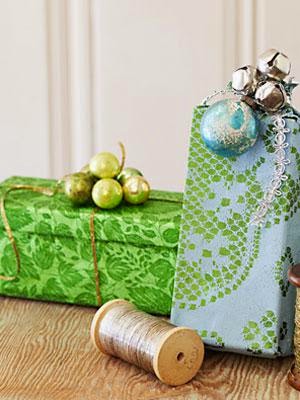
Have you ever thought about using embossed plant foil instead of conventional packaging materials? This particular foil is used for covering plant containers and is similar to aluminium foils in terms of texture. So, it is obvious that you would not need any tape to seal the ends. You only need to roll or fold the edges and give it a little pinch. That would take care of the sealing part. For decoration, you can always add balls and mismatched bells at the top section. 

Wrapped in Cloth

Wrapped in Cloth


This may not be the regular gift wrapping idea as not many are open to the notion of using cloth as a packaging material. But this is indeed a rustic packaging material and reflects the way in which things used to be packed in the old times. Use any piece of cloth and simply tie the ends after placing the gift in the fabric. 

The idea in the image is just for reference. It is obvious that you need to select the print and design in keeping with the occasion. But this is definitely a great idea which not only saves time but is pretty easy to manage without using a lot of stuff. 


Wednesday, 24 September 2014

Having Trouble Packing Fragile Items? Here are 7 Tips to Help You Out

Packing Fragile Items
Irrespective of whether you are planning on relocating your residence, or you are shifting your office to a new location, there would always be some fragile items that will give you a tough time during packing. You can never be too careful with these items because if they break, then it takes a lot of effort to repair it. In certain situations, it becomes impossible to repair it and the only possible resolution is to get a new one. So if it is an expensive vase or a delicate frame, then you would be in a lot of trouble.

Don’t let fragile items scare the hell out of you. Here are 7 tips that will help you to ensure their safety and proper packaging.

Always Prepare the Moving Boxes Correctly

This is the most crucial stage in the packing process. It is obvious that you would be going for the regular Moving Boxes or boxes made from corrugated packaging material. You need to focus on the packaging when you are dealing with heavy items or fragile products. The best way to go about doing it is to make sure that the base is secure as this is the area that is bound to collapse if it is not taped off properly. Make sure that you tape the bottom of the box in an “X” pattern. This should give it better strength. Additionally, you may put crumpled paper in the bottom to provide more cushion. 

Upgrade the Moving Boxes If Required

Like mentioned above, with delicate and fragile items you can never be too careful. It would be wise to do away with the old Packaging Materials and boxes. Instead, get high quality boxes that are not only durable but provide adequate protection from external impacts and forces, and this is really beneficial during transportation. This also helps to reduce the risks that the products are subjected to during transit.

Only Use Good Packing Paper

Generally, we make use of old newspapers or other things to provide cushioning to the fragile products. Newspaper is the most commonly used packing paper and it is good. However, if you wrap it around anything, the ink tends to get rubbed on to it. This can be really off putting if you have an expensive or delicate fragile item. It is also rather cumbersome to remove the ink that has rubbed off from the newsprint. The best approach is to use an unprinted paper as it gives the same quality but has the benefit of having no print at all. This may be slightly expensive as compared to newspaper, but if you are on a low budget then you may use both in combination to achieve the desired result.

Fill in the Gaps

The first rule of packing fragile items is that they should not move while being transported. So make sure that you fill in the gaps with adequate padding and other cushioning materials that the things are packed tightly. People usually think of using packing peanuts and this would be a good option if it wasn’t so expensive and if it did not create a mess every time the package was opened. You can use old paper or other simple materials also.

Wrap Each Item With Care

In the case of bowls, glasses or other small delicate items, it would be better if they were to be wrapped individually and then placed together because they tend to rub against each other. For glasses and other items with a hollowed centre, you need to crumple paper into a ball and then stuff it into the gap. This needs to be followed by wrapping the item with paper or other wrapping material. However, in the case of plates, it is better to stack them up and then wrap the entire “tower “of plates. It is much easier to handle it this way.

Listen to the Package

This is the best way to check whether you have packed the things properly. If there is any mistake or faults with the padding, then you would be able to hear a clink or a thud upon shaking the package. So add more cushioning till the time the contents are so intact that they don’t move and you don’t hear anything.

Go With the “Top-Light and Bottom-Heavy” Approach


Irrespective of the type of fragile material or the quantity, you should always place the heavy items at the bottom while leaving the light ones for the top. Even with proper packaging, if you place heavy items on top, then the contents in the bottom are at a risk of being crushed under the weight. 

Tuesday, 2 September 2014

Honey! I Packed My Kids!

Packaging Material

So you are planning on relocating. Not a big deal, right? You could say so if you do not have toddlers or kids around. But if you think that managing relocation, especially packing your stuff, with kids around would be a breeze, then you are mistaken. Things could get out of control and you could end up packing your own kids if you are not careful because for them, this is a fun playground and they can hide behind your stuff. They could also damage themselves with sharp tools that are often used while handling different Packaging Materials.

You need to ensure the safety of your children, and you need to manage things in such a way that they do not add to the already existing hassles of moving. You could try to involve them in the packing process and make the entire thing a fun experience. Here are some tips that could help you to make relocation as safe and fun as possible.

Keep Plenty of Lead Time
Do not keep things till the last minute. Keep sufficient lead time and make sure that you plan things ahead of time. Start sorting out things slowly so that when the time comes to pack them up, you would not have to spend a lot of time in organizing things.

Make Sure You Keep Dangerous Materials Out of Reach
Even if you have ordered Relocation Boxes for moving your stuff safely, there are tool such as scissors, knives, etc that could be dangerous if left unattended in the hands of kids. You would not want them to hurt themselves with it. So always keep an eye out for them and the moment you see them playing around with such things, take it from them and keep them out of reach.

Involve the Kids in the Packing Process
Not every item in your house would be fragile or sensitive. Pillows, bed sheets or other things can be managed by kids and they would love to be involved in all the activities. You can even use their help in labelling the boxes. This will keep them engrossed and it would keep them out of harm’s way as well.

Get Ready to Lose Your Slumber
The best time to pack delicate stuff is when children are not around. This would be a difficult thing to manage during the day. So you could carry on your work after they have gone to sleep. But make sure that you work in silence, lest they should wake up and spoil your efforts.

Save Your Kids’ Stuff for the Last

If you pack your kids’ toys and other knick knacks, then it would be difficult to manage them. Keep their things for the last and let them play with their stuff so that you have adequate time and opportunity to organize your packages. 

Thursday, 26 June 2014

Are Your Shipping Boxes Failing To Get Noticed?


Shipping Boxes

There are countless times when you must have used packaging boxes to send across your products to your customers. You may have even used them for sending personal items to your closed ones. No matter how you send your products, presentation matters a lot and this includes factors such as dimensions of the packing box, its presentation, branding, etc.

As an eCommerce business, you need to actually revamp your packaging so that your business gets noticed through the package design. Now, this requires Customized Boxes so that your products are stored in the perfect package which contains adequate branding to promote the business. This is probably the most distinctive benefit of using custom boxes.

“Why should you brand the boxes?”  It’s simple. People nowadays tend to share valuable things on their social networks. If your package appeals to them, then they would gladly share their happiness with their social connections and this in turn could set off a chain reaction where more people start sharing information about your packaging. This helps to achieve a much greater marketing reach which would have incurred some hefty expenses for your company’s marketing budget.

Now if we consider the dimensions of the pack itself, you need to understand that customers perceive the size of the box and its presentation to be an indication of the size and worth of the contents respectively. You would not want your customer to develop high expectations from a large sized box when in fact the contents are comparatively small and could have been shipped in smaller sized packages.

Managing the dimensions of your packages can also help you to reduce wastage of raw materials. This can provide you better cost savings and this saved amount may be invested in other areas such as custom branding solutions. But be sure to identify your requirements and choose the right package design for it.

A good example to explain this better is any product that does not have uniform shapes or dimensions. Such products can be packed effectively with the use of flexible Packaging Materials such as corrugated rolls or bubble wrap rolls. So make it a point to decide the most suitable packaging material that would fulfill your needs in the most effective manner.

Some of your products may also be required to be packed with greater protection or it could simply be done to ensure less damage during transit. In such cases, the use of customized boxes could actually help you to achieve greater customer satisfaction.

As is evident from the discussion, your packages fail to get noticed because they are bland and have no branding or presentation to spice it up. Without such elements, there is no reason for people to even consider noticing it enough to retain it in their minds. So go ahead, add your logo, make the presentation highly appealing, customize your boxes to suit the contents, endow it with adequate protection and voila – you have a great package with tremendous marketing potential.